
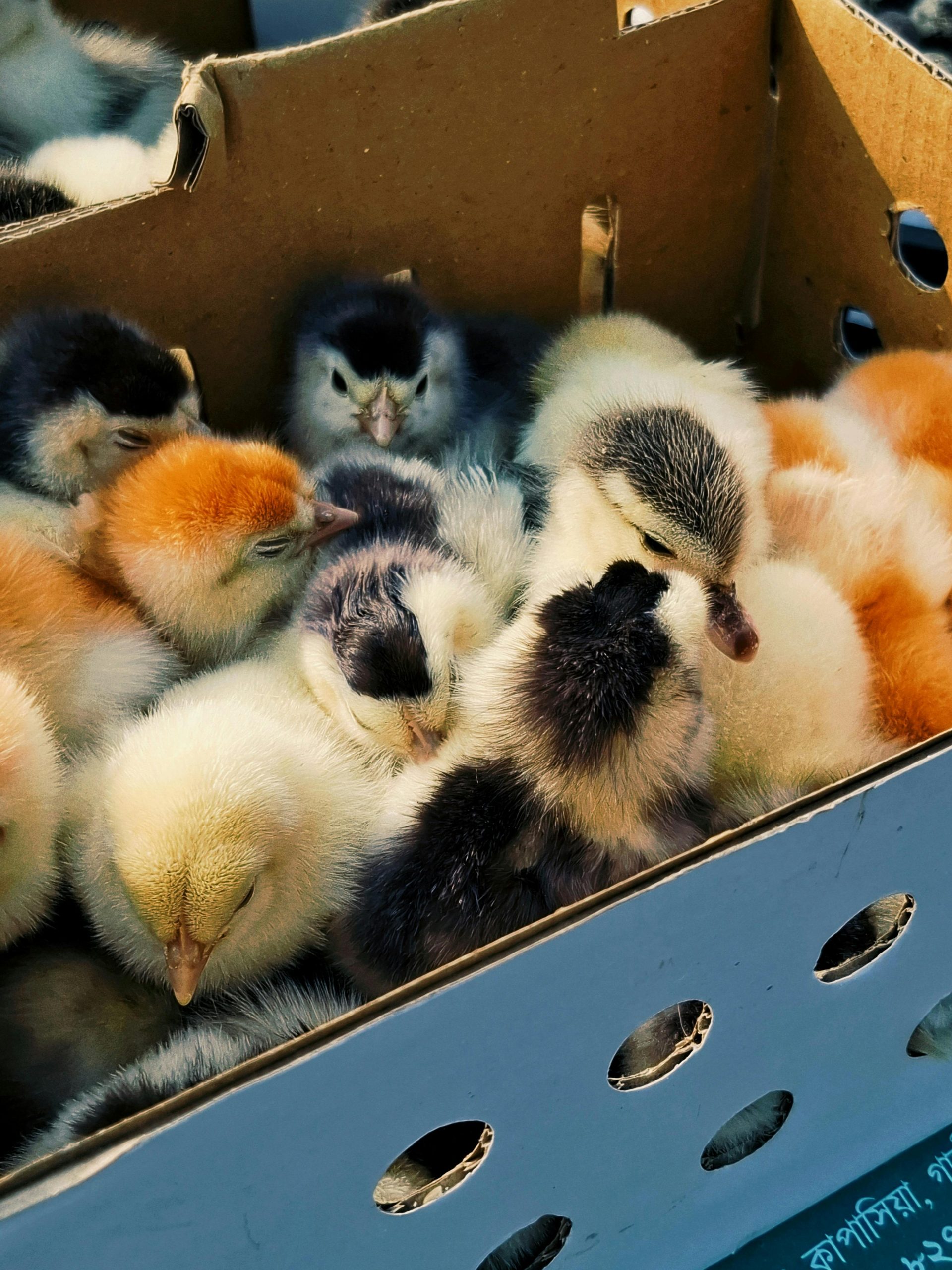
They’re shipped as parcels. They die as living beings.
When someone orders day-old chicks from an online hatchery, those animals enter a system not designed for them.
Under current policy, chicks are classified as perishable goods within the U.S. Mail system and handled in the same logistical category as items such as food or plants. This distinction matters. Because they are treated as parcels rather than live animals, they are not subject to the animal welfare standards required for other forms of live animal transport.
From the moment they are boxed, their survival depends on a logistics network that does not account for their welfare or biological needs.
What actually happens in transit
Day-old chicks are placed into small cardboard shipping boxes, often in large quantities, and sent through standard postal routes. These routes can include trucks, distribution centers, airport cargo holds, and sorting facilities.
Along the way, they are exposed to conditions that fluctuate dramatically:
- No climate control: Temperatures in trucks and cargo holds can quickly become extreme, especially on tarmacs or in transit delays.
- No access to food or water: Chicks are shipped without sustenance, relying only on limited internal reserves.
- No welfare monitoring: There are no required checks to ensure they are alive, safe, or stable during transit.
Under ideal conditions, shipments may arrive quickly. But when delays occur, and they frequently do, those vulnerabilities become fatal.
Packages can sit for hours or days in facilities not equipped to handle live animals. There is no dedicated alert system for delayed shipments containing living beings, no rerouting protocol, and no accountability mechanism when animals are left in transit beyond safe timeframes.
What the hatchery system doesn’t fully explain
The mail-order chick industry often relies on a set of reassuring claims about chick resilience. However, available research and animal physiology tell a more complex and more concerning story.
The yolk sac misconception
It is often said that chicks can safely survive for days without food because they absorb nutrients from their yolk sac. In reality, the yolk sac is meant to supplement early feeding, not replace it. Prolonged deprivation increases mortality risk and can lead to lasting health issues.
Temperature sensitivity
Chicks are extremely vulnerable to temperature extremes. High heat can quickly lead to fatal dehydration, while cooler temperatures can cause hypothermia in a matter of hours. Without regulated environments, even short exposure windows can become deadly.
Dehydration risks in transit
Air travel introduces another layer of risk. Cargo hold humidity levels can drop significantly, accelerating dehydration. Without access to water, chicks can exhaust their limited reserves during extended transit times.
A system shaped by policy, not welfare
The continued shipment of chicks through the mail is not accidental; it is the result of policy decisions.
In the early 2000s, concerns about mortality rates led at least one major airline to attempt to stop transporting chicks. However, industry pressure resulted in policies that allowed (and required) continued transport under mail classifications.
Today, that framework remains in place, prioritizing logistics and cost over consistent welfare standards.
Why reform matters—and what can change
Because chicks are shipped under postal classification, the U.S. Postal Service has significant control over how they are handled. That means change is possible.
Legislative action could close the loopholes that prevent airlines and carriers from applying higher welfare standards to animals shipped as mail.
Policy reform is critical, but it is only part of the solution.
One of the most immediate ways to reduce suffering is to lessen the demand that drives this system. Every purchase of mail-order chicks reinforces a supply chain that treats living beings as shippable goods.
Choosing not to buy chicks through the mail, and instead supporting adoption, local sanctuaries, or opting out altogether, helps interrupt that cycle. When demand decreases, fewer animals are bred, boxed, and subjected to these conditions in the first place.
Make your voice heard
Real change happens through both systemic reform and individual action. Sending a clear, personal email to the Postmaster General helps put public pressure on the agency to reevaluate its policies and implement basic welfare protections for live animals in transit.
Take action and send your letter today and demand accountability.
