
Behind the funnel cakes and Ferris wheels, animals are paying the price for a “family tradition.”
The 2026 California State Fair opened July 17 at Cal Expo in Sacramento, and for 17 days, more than half a million visitors will stream through the gates for concerts, carnival rides, and deep-fried everything. They’ll also find livestock barns, petting zoos, and other animal exhibits marketed as wholesome agricultural education.
Here at Animal Place, just an hour up the road, we know the reality of what happens to the animals behind those exhibits because so many of our residents came from the very system the fair promotes and celebrates.
Here’s what’s hiding under all that “family fun”.
The animals don’t go home after the fair
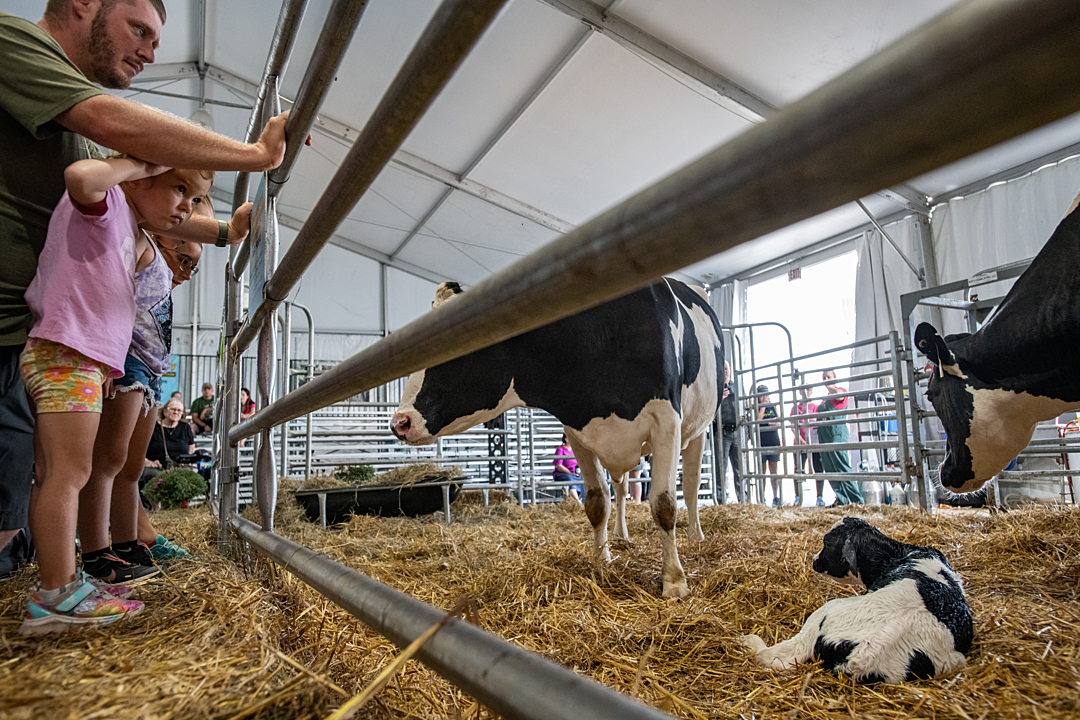
For fairgoers, a livestock barn is a 20-minute stroll. For the animals, it’s a stop on a much shorter journey. The pigs, cows, sheep, and goats that are paraded through show rings are ultimately auctioned off and sent to slaughter, often before their first birthday. What’s heartbreaking is that many of these animals were lovingly raised by kids in 4-H and FFA programs.,These youth programs teach children to raise an animal, name them, care for them for months, and then sell them. We’ve heard from former 4-H kids who describe the auction as one of the most painful memories of their childhood.
Teaching kids to suppress their empathy isn’t education. It’s the opposite.
Stress is the main event
Fairs are loud, hot, and chaotic, and that’s the experience for humans who choose to be there. For sensitive prey animals like sheep, goats, and rabbits, being confined in small pens while thousands of strangers poke and prod towards them is genuinely frightening. What looks like a calm sheep is often the opposite. Prey animals under acute stress go still, and behaviors visitors read as ‘calm’ are actually signals that a frightened animal has simply shut down.
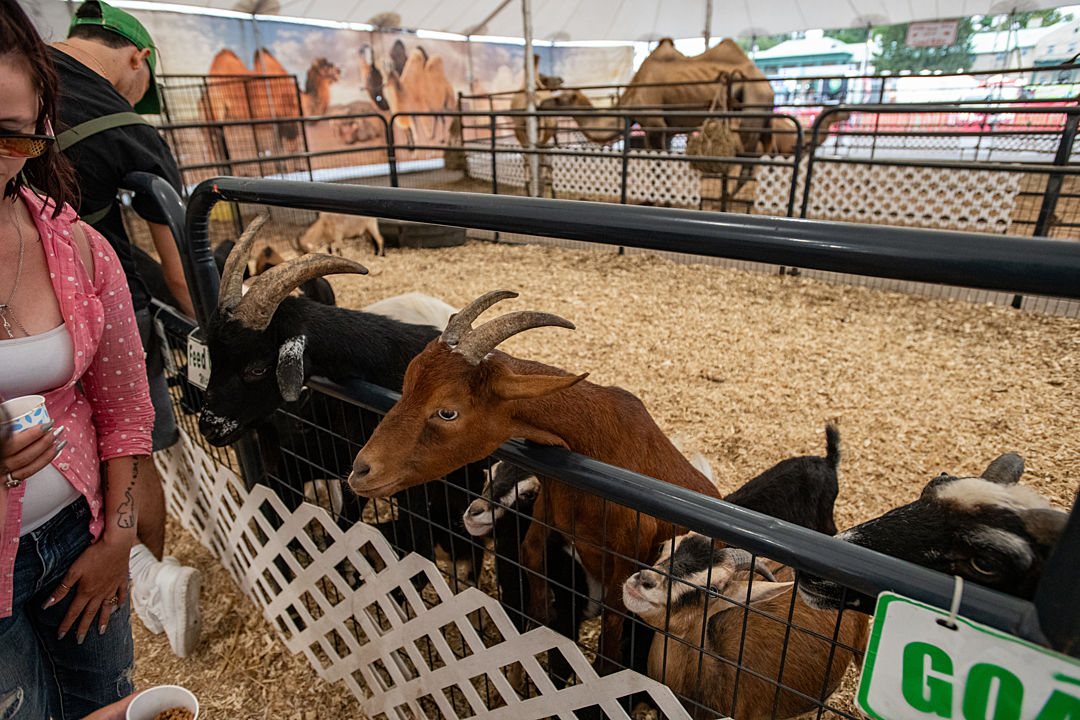
Petting zoos and pony rides add physical strain on top of the fear. Ponies have to walk the same circle for hours in triple-digit Sacramento heat. Animals handled by crowds all day have nowhere to retreat.
This isn’t a life, and it isn’t harmless.
The “education” is really marketing
State fairs began as showcases for animal agriculture, and they still are. The awards ceremonies come with corporate sponsors attached. What visitors see is a carefully curated version of farming: clean straw, ribbons, smiling kids.
What they don’t see is where these animals come from or where they’re headed. There are no exhibits showcasing farrowing crates, dehorning, or slaughter.
That’s by design.
When we present animals this way, we teach the next generation that they’re unfeeling products, not individuals worthy of compassion.
What you can do
- Skip the fair. Attendance is the fair’s currency. If you do attend, let your dollars reflect your values. Support local artists and attend the concerts, but avoid paying for or participating in animal exhibits, petting zoos, and other attractions that use animals as entertainment.
- Support policy change and share your thoughts. These events persist because they’re profitable and unquestioned. Share a polite, personal message with the Cal Expo Board of Directors at (916) 263-3000 or castatefair.com/contact-us. Then keep the momentum going by taking action with us on more issues affecting farmed animals.
- Talk with your kids. If your children are curious about the animals at the fair, be honest in an age-appropriate way. Empathy is a strength. Nurture it, don’t suppress it.
- Meet the animals somewhere they’re safe. Only an hour from Cal Expo, Animal Place offers lifelong sanctuary to pigs, cows, sheep, goats, chickens, and other rescued farmed animals. Book a tour and get to know these animals as the individuals they are, not as exhibits and entertainment.
- Choose plant-based food at the fair. The fair’s food lineup now includes plant-based options. Vote with your fork, even on the midway.
- Share this article. Most fairgoers have simply never thought about what animals experience at the fair. You can be the reason someone does.
Animals didn’t sign up for the show, and it’s time we stopped putting them in it.
Image source: We Animals Media
