

We all know that rabbits breed like, well, rabbits, but most people don’t know that they form strong, loving bonds. Behind dogs and cats, bunnies are often cited as the third most popular companion animal in the United States. However, unlike many other companion animals, rabbits have complex social hierarchies that can be difficult to navigate. Putting two rabbits together who have never met before can be deadly.
Enter: bunny bonding! As cute as it sounds, this can be an arduous task. Because it often entails specialized training and time, many rabbit rescues offer free bunny bonding services for their adopted buns. Before we get into the details of the bonding process, let’s take a step back and look at why we need to bond rabbits in the first place.
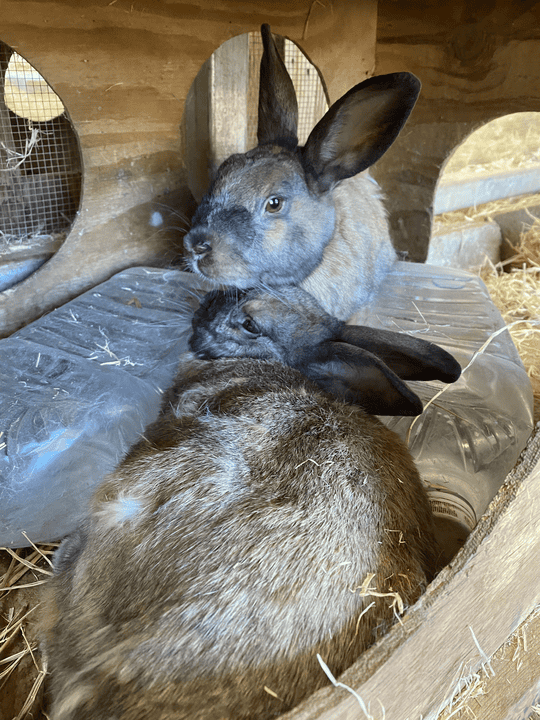
Why rabbits need companionship: Socializing and Health
Rabbits are highly social creatures and thrive with a bonded partner. When alone, rabbits can become highly destructive and aggressive. Chu et al. found that, along with ample space in enclosures, keeping rabbits in pairs will “improve the long-term welfare of laboratory rabbits.” Many other studies, including one by Turner et al., align with the findings that rabbits kept in pairs or groups had improved physical health and mental well-being. Although most researchers only study the behaviors of caged rabbits in labs, many companion bunny guardians agree that bonded bunnies are the way to go.
Why rabbits need companionship: Safety and Support
Not only do bonded mates groom each other and play together, but they also provide each other with emotional support and physical security. When enduring stress, a bonded bunny will find their mate to console them. I’ll never forget my poor, terrified bunnies climbing on me at the vet, or smooshing so closely to each other, they became one. The guard rabbit, usually a female in domestic groups, will also stand guard and warn the others of any danger, often by stomping their foot. I’ve heard heart-wrenching stories of guard bunnies who gave their life against a predator to save the group.
What exactly is a bunny bond?
Bonding doesn’t have to be between a male and female rabbit. The key is bonding rabbits with compatible temperaments and complementary personalities. Bunny bonds can include multiple members and even other species, such as humans. Very few rabbits prefer to be solo buns, in which case their human guardians become their bonded mate. The strongest bonds are for life, and can be so intense that bonded partners must see the body of a deceased partner and say goodbye to them, otherwise risking starvation while they wait for the partner’s return. Some bonds are in constant turmoil, like a bickering couple or siblings, as the rabbits fight for dominance. Rabbits follow a matriarchal hierarchy, so having a dominant male rabbit can cause problems in a male-female pair (speaking from experience here).
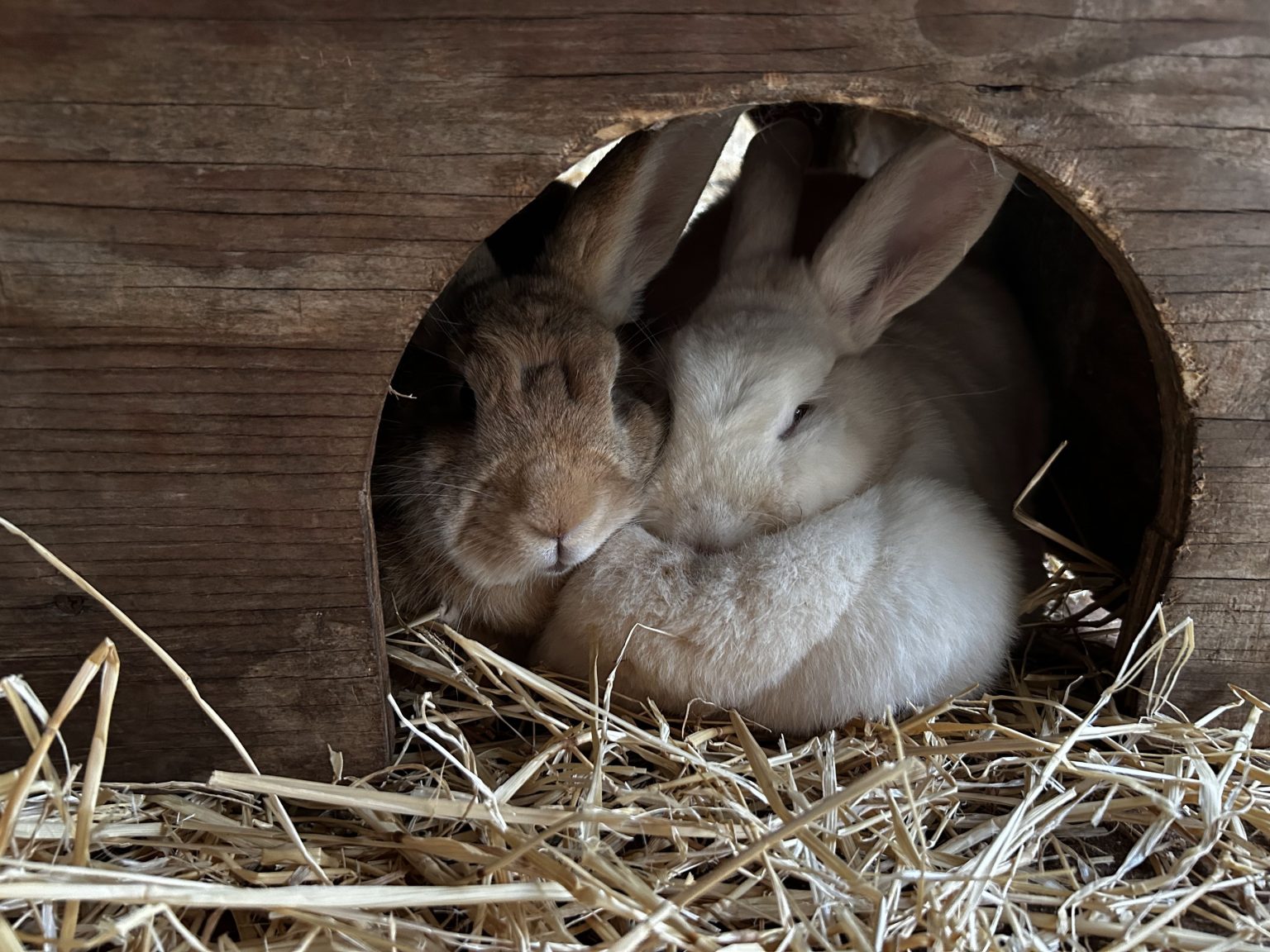
Bunny Bonding Basics
There are various methods used for bunny bonding, but all agree that neutering and/or spaying all parties is the first step. Neutering and spaying not only reduces aggression but also can protect against reproductive cancer, especially in females. Choosing a forever partner for your rabbit is no easy feat. Consider yourself the matchmaker who may know what’s best, but your bun may have other plans. Rabbit.org breaks it down quite nicely, but we’ll just summarize here.
First, start with a neutral space, one that neither rabbit has occupied, and that doesn’t contain any items used by either rabbit. Remember the “territorial” part mentioned at the beginning? Most commonly, bonding is suggested to take place in a small space to prevent them from chasing each other. However, others recommend a larger space to allow bunnies to hide and get a break, especially when there is a lot of chasing. Each bunny is different, so choose what works best for your fluffy friends.
There are two common types of bonding methods: the slow method and the fast method. The slow method involves at least 20 minutes a day, during which you are monitoring them closely together. When rabbits are bonding, they should never be left alone with each other, as serious and sometimes fatal injuries can occur. Although they may have done well together yesterday, today might be a different story. Take each day at a time and remember that bonding can take months. The faster method usually involves some sort of speed dating, where you’ve already matched dispositions and just need to close the deal. This method involves the pair staying together 24 hours a day for at least a week, with some bun parents literally camping out to supervise. Whatever method you choose, please always do your research. No two buns are ever alike, so what works for one may not work for another.
Bond Repair
Broken bond? It happens! Splitting up bonded pairs can lead to the bond being broken, with some bonds becoming irreparable. For this reason, it is advised to always keep bonded pairs together even during vet visits. One solution to fixing broken bonds is going for a drive, just like you might do to soothe a screaming newborn. Fun fact: Rabbits trauma bond well in short increments, and things like car rides, where they are stuck together in a frightening situation, will help them seek each other out for emotional comfort and help grow their bond. However, some bunny advocates warn against using stressful activities for bonding purposes.
Have more questions?
There’s a rabbit hole full of research on the internet you can dive into, but here are resources we recommend:
- https://rabbit.org/behavior/bonding-rabbits-faq/
- Take an online class by House Rabbit Society: https://app.acuityscheduling.com/schedule/d4f5925a/?appointmentTypeIds[]=32745131
- HRS Hopscotch Exercise diagram: https://static1.squarespace.com/static/66bd213251482915e63ab74e/t/67ba6bebeb77d836d4f3a0a9/1740270573344/Introducing+Rabbits+-+Hopscotch+Exercise+2024.pdf
- San Diego HRS: https://sandiegorabbits.org/education/bunny-bonding-basic
