
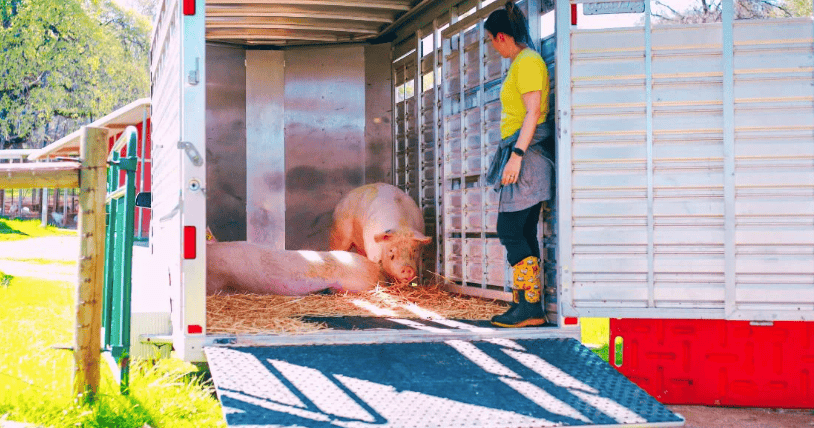
How two pigs exploited for research are safe at sanctuary
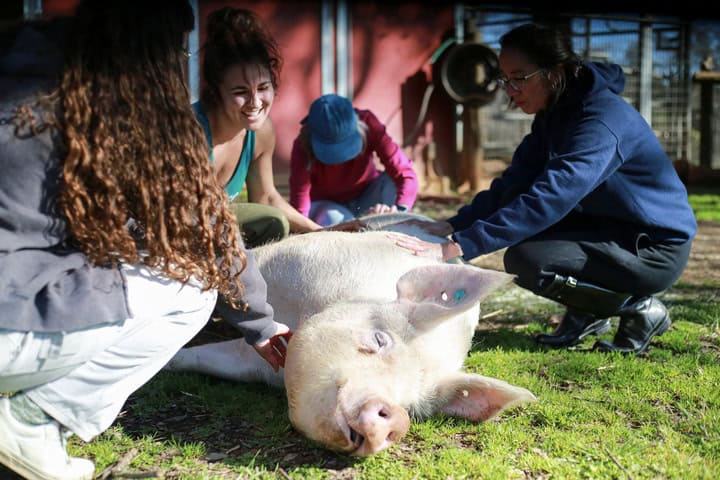
After more than two years in concrete pens, Claire and Maisy are taking their first steps on grass and soft earth. Please welcome these two lovelies to what we hope is many years in sanctuary. You can support their sanctuary journey here.
Late last year, we were contacted by a graduate researcher at UC Davis. She was researching individual pig differences in problem-solving, abnormal behaviors, and the use of enrichment.
As her research neared completion, she wanted a better life for the pigs. The process to get Maisy and Claire (named after the graduate student) from research to sanctuary was a challenge. But after months of waiting, we signed the adoption paperwork! Then we coordinated Maisy and Claire’s spay surgeries and transport home to Animal Place.
Their surgeries cost $4,600, and if you would like to contribute to their medical bill and care, you can here.
The life Claire and Maisy lived as experimental subjects is very different than sanctuary life. It was, sadly, very similar to how many pigs are housed and treated on farms across the country.
Housing & Flooring: A Recipe for Hoof Issues
The pigs at the Swine Teaching and Research Center live inside a barn on concrete flooring. The parental herd is made up of 70 female pigs and 6 males. The two nursery rooms can house 150 pigs each. There are 10 farrowing crates, which are crates used to confine female pigs who have given birth. The mother pig has no room to turn around, while the piglets have a small external area. This flooring is slatted so that the mother pig’s urine and feces fall beneath her.
Research shows that concrete flooring increases the risks of injury, abrasions, joint issues, and laminitis. One of the pigs, Maisy, already has a hoof infection. Concrete flooring also leads to hoof overgrowth and abscesses.
At Animal Place, Maisy and Claire will spend most of their time on soil, dirt, and grass. Hoof care is vital here, and both will receive regular hoof inspections and management for the remainder of their lives.
Breeding & Crates
The research center regularly breeds herd members to produce piglets for research and slaughter. Both Maisy and Claire were bred and gave birth to litters.
During their pregnancies, they were free-housed with 3-6 other female pigs. When they were about to give birth, they were moved to farrowing crates. These crates restrict the mother’s ability to turn around. She can stand up, sit, and lie down. Her piglets have a smaller area next to her.
The mother will spend 2-3 weeks in the crate until the piglets are forcibly weaned and removed.
At Animal Place, we do not restrict the movement of our pig friends, except for important medical procedures. Claire and Maisy will never be bred again, as we ensured they underwent an ovariectomy to prevent future pregnancies. All of our pigs are spayed (or undergo an ovariectomy) and neutered to prevent breeding and reduce the risk of cancers.
Feeding
The pigs at the research facility are fed once a day on a concentrated corn feed. This is not an appropriate diet for longevity and good health. The once-a-day feeding leaves pigs feeling constantly hungry and lacking appropriate fiber. This leads to constipation and gastrointestinal difficulties.
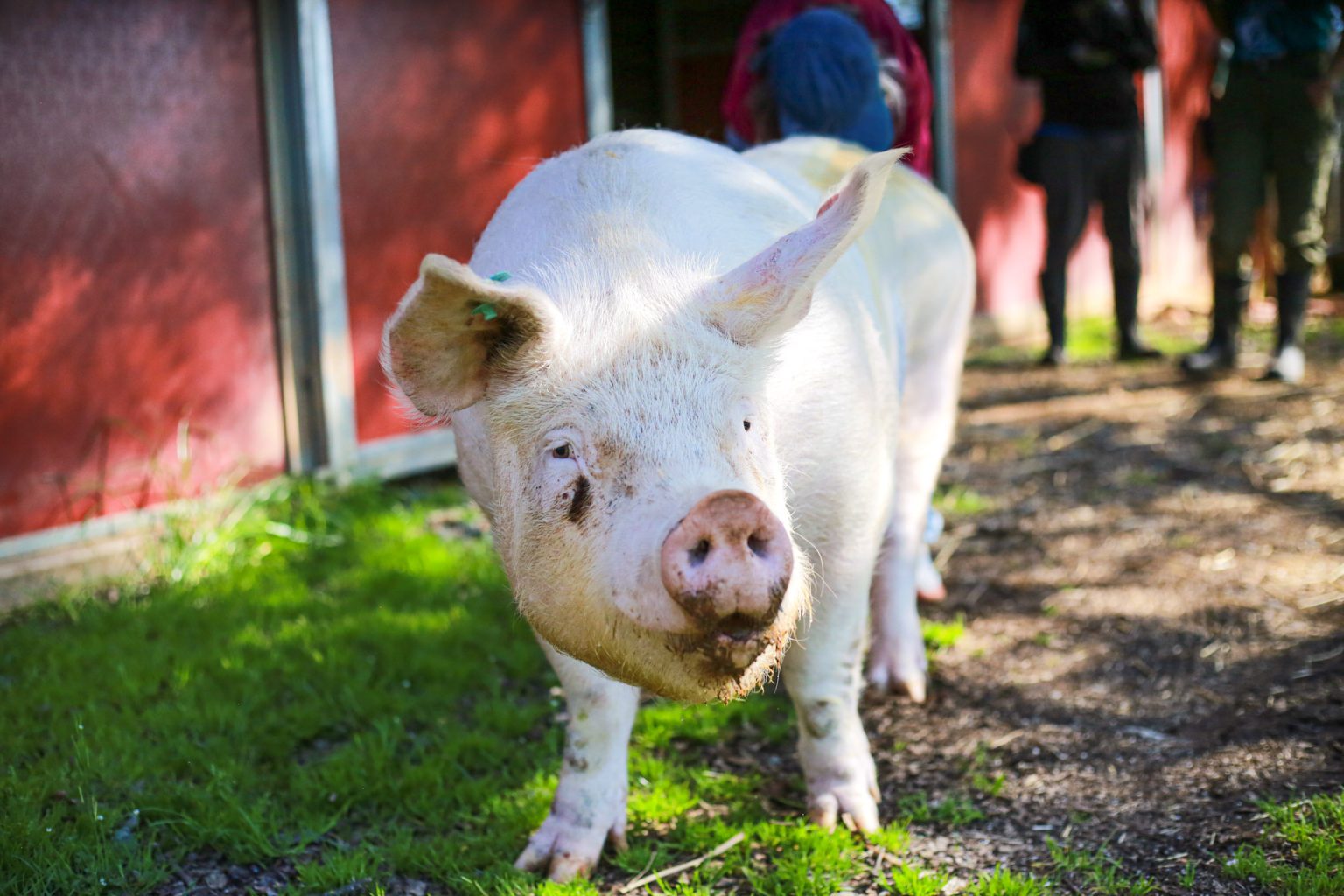
At Animal Place, Maisy and Claire – like all our pig friends – receive a breakfast and lunch of nutritionally appropriate feed. They receive produce to help with digestion, and they have free access to grass and graze throughout the day. While they never say no to a treat, they are not ravenous or starved.
It is hard to believe that this is the life deemed acceptable for these pigs. It is such a far cry from how they live here at sanctuary. When pigs are no longer valuable, for research or breeding, they are sent to slaughter.
A three-year-old pig has at least another decade of living to enjoy.
And that is what we plan to give to Claire and Maisy.
What You Can Do:
- Donate to Claire and Maisy’s care
- Choose plant-based foods; there are so many alternatives to things like bacon
- If you are local, sign up to become a volunteer

