
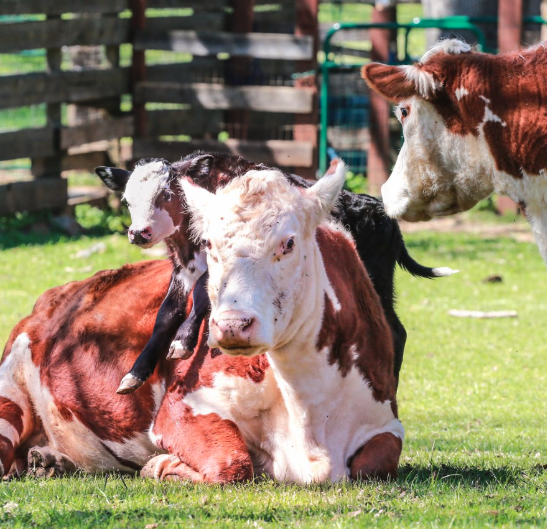
Every Mother’s Day, we celebrate the depth of a mother’s love. We send flowers. We make dinner reservations. We pause to honor the women who raised us.
But the holiday we observe today was never meant to be about dinners or flowers. And the mothers we forget to honor outnumber us by billions.
The Radical Roots of Mother’s Day
Mother’s Day didn’t begin as a Hallmark holiday, but as a cry against violence.
In 1870, abolitionist and suffragist Julia Ward Howe issued her Mother’s Day Proclamation, an antiwar manifesto calling on the mothers of the world to refuse to give their sons to slaughter. “Our husbands shall not come to us reeking with carnage,” she wrote. Mothers, she argued, had a moral authority and a moral duty to resist the systems that consumed their children’s lives.
Later, Anna Jarvis organized the first official Mother’s Day in 1908 as a day of personal tribute to her own mother and to peace. She spent the rest of her life trying to take it back after corporations commercialized it beyond recognition. She called greeting card manufacturers “charlatans” and died penniless, fighting the holiday she created.
Howe and Jarvis understood something that gets lost in the flower arrangements: mothers are not symbols. They are living, feeling beings whose bodies and bonds have always been at the mercy of power.
The Bodies We Don’t Count
In the United States alone, more than 315 million hens are kept in the egg industry at any given time. Nearly all of them are White Leghorns, a breed selectively developed over decades to produce an egg almost every single day.
A hen’s wild ancestor, the red junglefowl, lays eggs in response to season, climate, and daylight cycles. In temperate climates, she may lay a clutch of roughly 8 to 15 eggs, hatch and raise her chicks, and then begin the cycle again, resulting in multiple clutches over the course of a year. By contrast, a modern Leghorn chicken may lay more than 300 eggs annually. That relentless biological labor, driven not by natural reproductive rhythms but by intensive selective breeding, takes a severe toll on her body.
This biological cost has a name in the scientific literature: incessant ovulation. Each time a hen ovulates, the surface of her ovary ruptures and must repair itself. This cycle of injury and inflammation is repeated for the Leghorn more than 300 times a year. By the time she is two years old, she has experienced several hundred ovulations, which is the reproductive equivalent of a woman approaching menopause. The ovary is not designed to rupture and heal hundreds of times. Each time it does, the risk of a mistake – a mutation, a cell gone rogue – quietly grows. By the time a hen is a few years old, the odds have shifted dramatically: approximately 83% will develop ovarian cancer after three to four years of continuous laying.
Cancer researchers have long recognized what the egg industry obscures. Laying hens develop ovarian cancer spontaneously, at rates no other animal model can match, and their reproductive biology is close enough to ours that what happens in their bodies tells us something real about what happens in ours. When researchers interrupted the laying cycle with progesterone, cancer rates fell, the same reason birth control pills reduce ovarian cancer risk in women.
She can’t opt out. She cannot rest. Her body is a production line.
When her egg output declines, typically between 18 and 24 months, she is considered “spent.” In large egg-production states, she is crammed into a cage, stacked in a truck, then sent to slaughter. In California, she is gassed with carbon dioxide and her body composted or dumped in a landfill. Her body, having given everything it could give, is discarded.
Her male counterparts never make it that far. Male chicks of the Leghorn breed cannot lay eggs and have been bred too lean for meat production. They are killed on their first day of life, ground up or suffocated in bags, at a rate of approximately 300 million per year in the U.S. alone – a mother’s sons, gone within hours of hatching.
What Cows Lose
Cows carry their calves for nine months, the same as a human pregnancy. The bond between a cow and her newborn calf has been documented by researchers and observed by farmers for generations. Cows call for their calves for days after separation. Calves cry for their mothers.
On dairy farms, this separation is standard practice, typically within hours or days of birth. The milk produced for the calf is the product being sold. Without separation, there is no industry.
Female calves may enter the dairy herd themselves, condemned to the same cycle of forced pregnancy, birth, and separation. Male calves, no use to the dairy industry, are sold to veal operations or beef production.
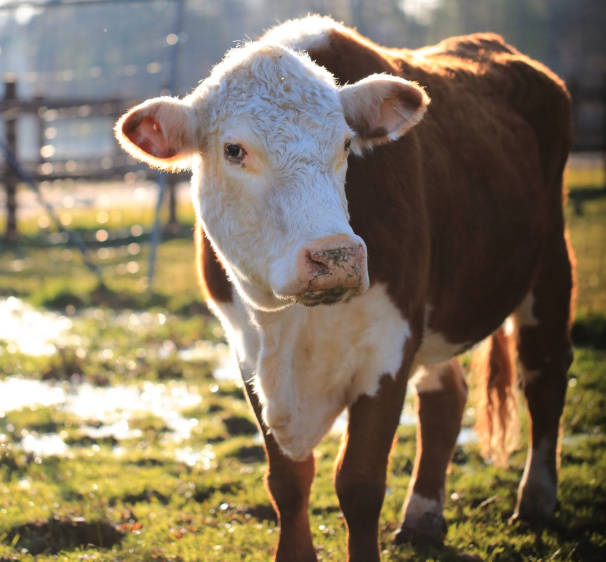
Babe and Honey spent nearly 20 years together before their caregiver entered hospice. With no other plan in place, the family considered slaughter. Instead, they reached out for help. We welcomed Babe and Honey to the sanctuary, both of them senior cows, 19 and 20 years old. No one expected them to be pregnant.
Shortly after their arrival, both gave birth to boys. Babe has raised her son Edgar with care and devotion, and she takes her role as his mother seriously to this day. When Honey passed away, Babe didn’t stop there. She extended that same care to Honey’s son, Elliott, her nephew. Two mothers who came to us at the end of what could have been their lives. One is still mothering.
What Motherhood Looks Like When Given the Chance
Not every mother is born into the role. Some choose it.
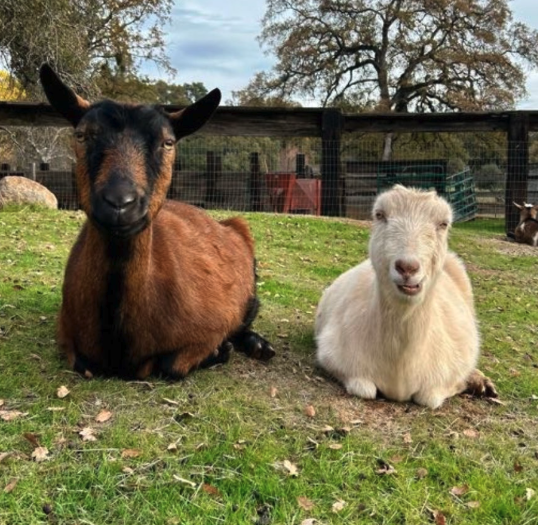
Matilda came to us four years ago alongside her best friend, both rescued from a 4-H program where conditions had become unsustainable. When Matilda’s friend gave birth and then suddenly died, she left behind two babies, Joy and Jolene, with no mother to care for them. Matilda stepped in without hesitation. She allowed Joy and Jolene to nurse from her, stayed close, and took her role seriously in every way that mattered. Four years later, the trio remains inseparable. Joy and Jolene still check in with Matilda. Matilda still keeps watch.
She was never their biological mother. She chose them anyway.
Reclaiming the Radical Tradition
Julia Ward Howe’s proclamation was addressed to “the women of all nationalities.” She wrote that women had “too long” remained silent in the face of violence, that the time had come to use the “great and solemn word” of motherhood not as sentiment, but as power.
She could not have imagined the scale of what we now call animal agriculture. But her framework holds. The exploitation of female bodies, their reproductive labor, their milk, their eggs, and their bond with their young is not incidental to these industries. It is the industry.
To honor the original spirit of Mother’s Day is to see this clearly. To ask the question Howe asked about war: Why do we accept a system that devours mothers and their children as a matter of course?
What You Can Do
The most direct way to withdraw your participation is also the simplest: leave animals off your plate. Every meal is a small vote for a system that treats motherhood as a resource to be extracted.
Some mothers, given the chance, get to keep their children.
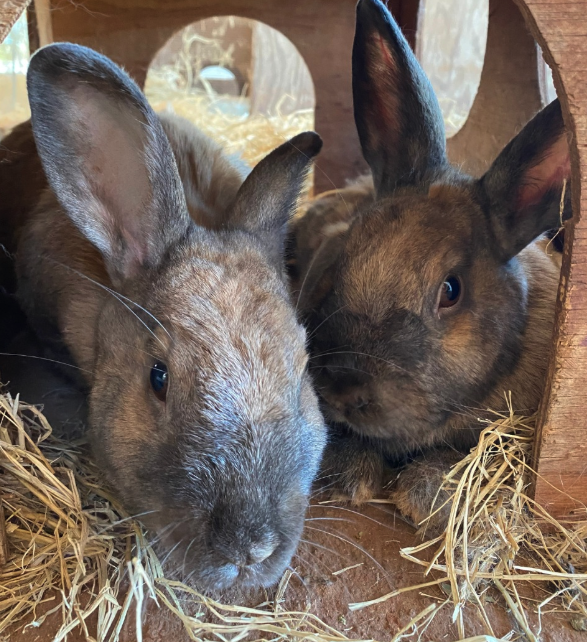
In 2021, a pregnant Mocha was dumped at a gas station. She was rescued, gave birth, and eventually found her way to us. Her daughters are social and outgoing. Her son, Latte, is timid and deeply bonded to her. We made sure they stayed together.
Today, Mocha and Latte can be found grooming each other, grazing side by side, running binkies together. He never had to lose her. She never had to lose him.
That is what’s possible when we decide it matters.
At Animal Place, we rescue, rehabilitate, and advocate for farmed animals, including hens who have survived the egg industry and cows who have lost their calves.
We’ve looked into their eyes. We know what’s there.
This Mother’s Day, we invite you to honor all mothers, including the ones whose names we never learned, whose bonds were broken for our convenience, whose bodies are still, right now, being used without consent.
They deserve better. And so does the tradition we inherited.
