
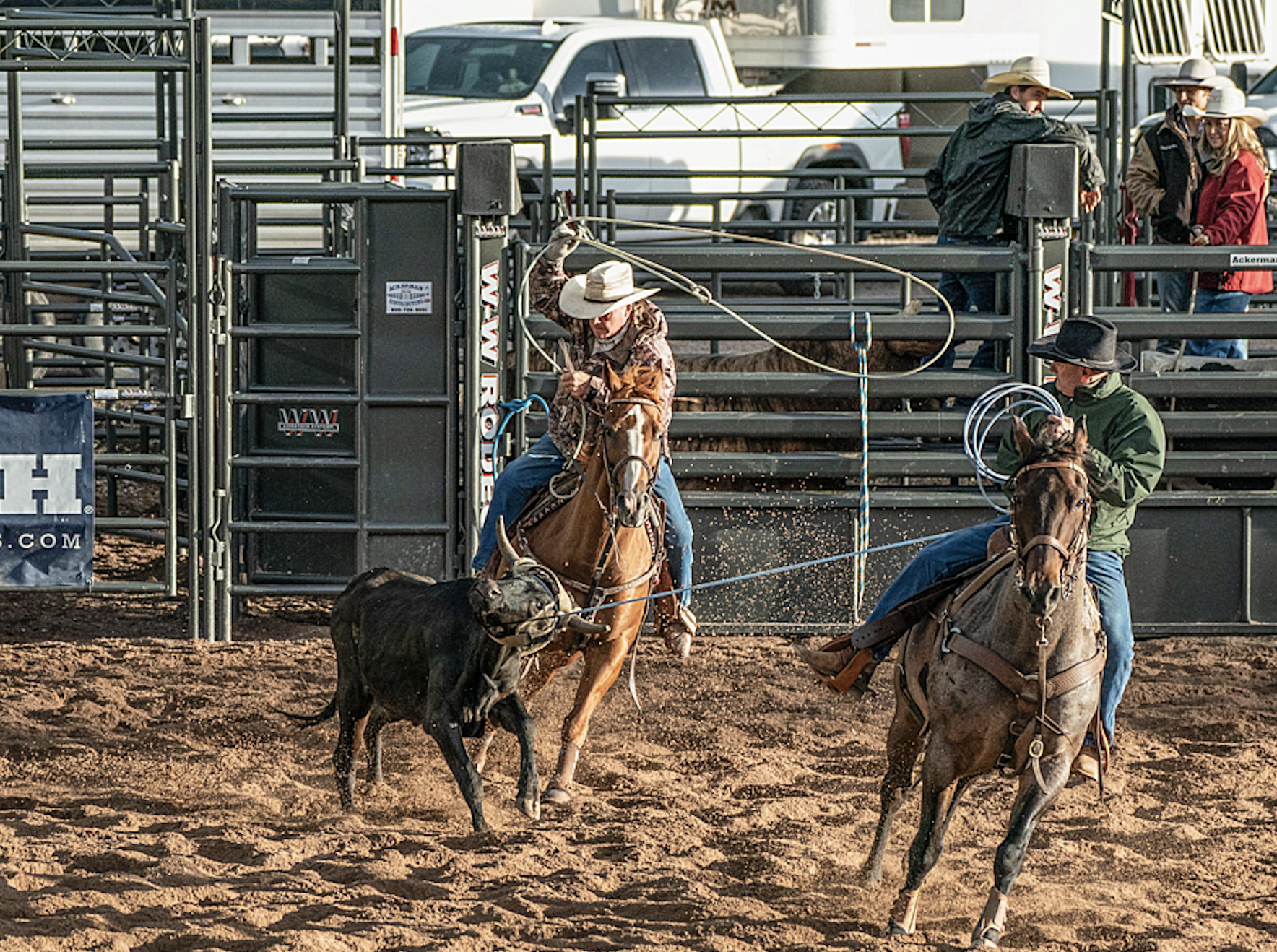
Rodeo promoters describe their events as celebrations of Western heritage, athletic competition, and family fun. What they rarely mention is the flank strap tightened around a bull’s abdomen to make him buck, the electric prod used to force a terrified animal out of a chute, or the calf as young as four months old being chased down, jerked off her feet by a rope around her neck or feet, and slammed to the ground.
All in under ten seconds, all for sport, all to cheering crowds.
At Animal Place, we have spent decades getting to know cows, pigs, chickens, and other farm animals as the curious, sensitive individuals they are. We know that these animals feel fear and pain just as acutely as any companion animal. That knowledge makes the rodeo industry impossible to ignore, especially when it sets up shop right in our backyard.
A System Designed to Cause Distress
Rodeos are not simply ranching skills on display. The core events, bull riding, bronc riding, calf roping, and steer wrestling, depend entirely on animals behaving in ways they would never choose on their own. To produce that behavior, the industry relies on pain-inducing equipment that animal welfare experts, veterinarians, and researchers have condemned for decades.
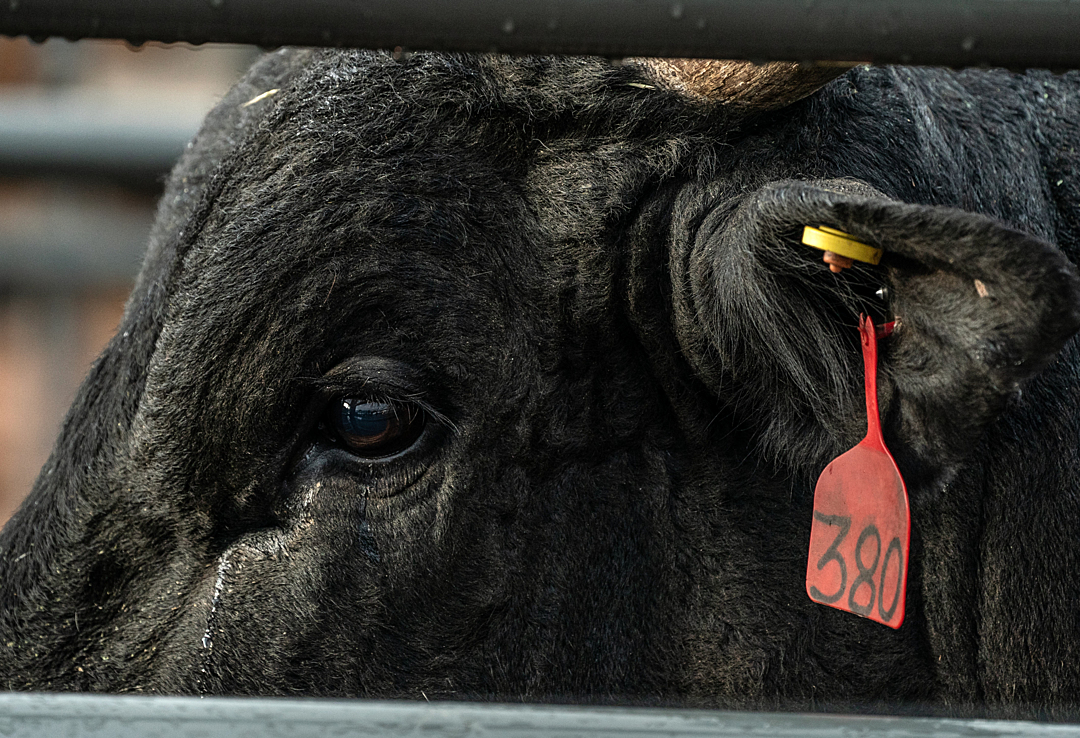
Few laws protect animals forced to perform in US rodeos. The federal Animal Welfare Act, the countrys primary legislation regulating the treatment of animals in research and exhibition, exempts rodeos from its animal protection provisions.
While some jurisdictions have narrowed prohibitions on specific rodeo events, others, such as several in California, have banned rodeos entirely, with Los Angeles proposing a similar ban in 2023. However, events such as horse tripping are prohibited in only 13 states across the country as of 2018. Rhode Island is the only state to ban the traditional calf and steer tie-down roping event, which animal advocates criticize as especially cruel.
Despite hundreds of rodeos occurring annually across North America, rodeo supporters argue that changing laws and ordinances affecting rodeos threatens their cultures survival.
The Flank Strap
The most common piece of rodeo equipment is the flank strap: a band cinched tightly around the sensitive underbelly of a bull or horse, an area with no rib cage protection, close to the large and small intestines, the groin, and the genitals. The strap causes intense discomfort that drives the animal to buck repeatedly in a desperate attempt to remove it. This is not natural behavior; it is a pain response. Former animal control officers have documented burrs and chemical irritants placed under flank straps to intensify animals’ reactions. A Humane Society of the United States study found that horses known for gentle temperaments bucked continuously when fitted with a flank strap, and stopped the moment it was removed.
Rodeo scoring actively rewards this suffering: bulls and horses that buck more violently earn higher scores. The industry has built a points system around maximizing an animal’s distress response.
Electric Prods and Spurs
Electric prods, called “hotshots,” are used in the chutes to startle animals into explosive reactions through electric shock. Metal spurs raked across the sides of bucking horses tear into skin and cause lasting damage. In 2023, animal welfare investigators from SHARK (Showing Animals Respect and Kindness) captured video evidence of abuse at a Chicago-area rodeo that led to criminal charges against a rider.
The Equipment Rodeos Depend on:
- Flank straps — cinched around the belly and groin to force bucking; cause open wounds, burns, and abrasions when hair rubs off, and skin chafes
- Electric prods (“hotshots”) — deliver painful electric shocks to force animals out of chutes or into agitated states
- Metal spurs — fixed or sharpened spurs tear into horse and bull flanks; several cities and states have outlawed them
- Chemical irritants — burrs and caustic ointments documented under flank straps by former animal control officers
Calf Roping: The Event Researchers Call Most Cruel
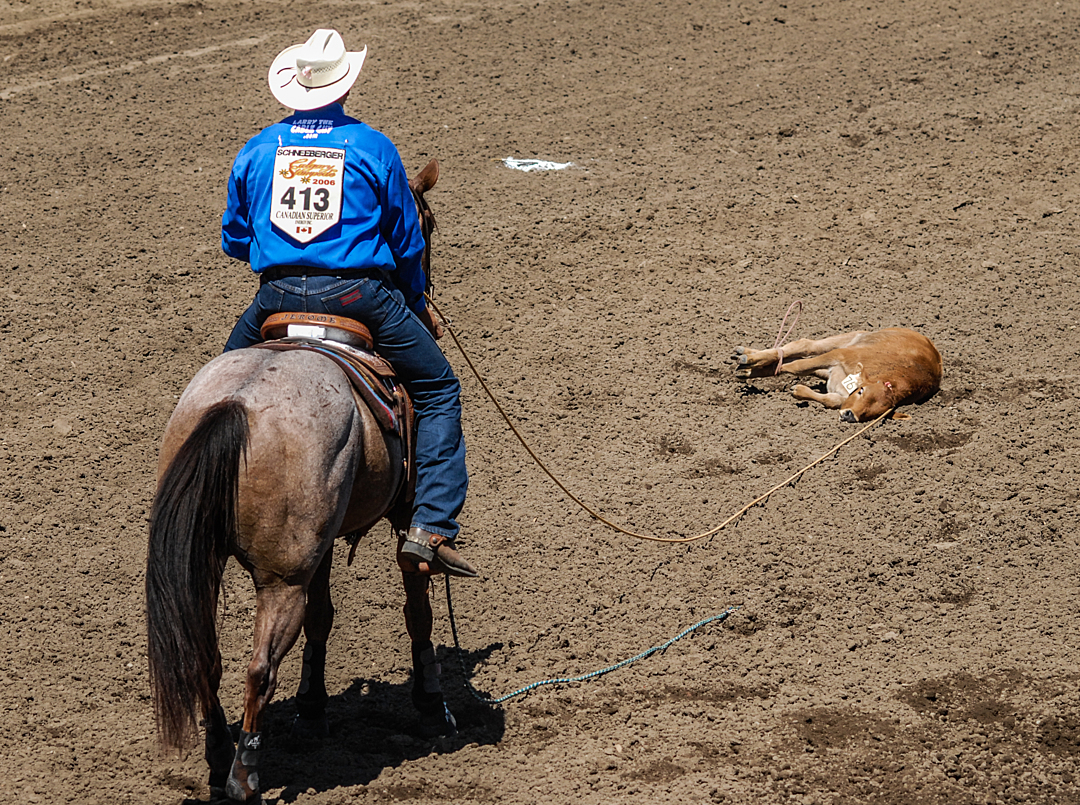
If one event encapsulates what is wrong with rodeo, it is calf roping, also called tie-down roping. Calves as young as four months old are loaded into narrow metal chutes, then released into an arena where a mounted rider chases them at full gallop. A lasso is thrown around the calf’s neck, jerking her to a sudden, violent stop. The rider dismounts, throws the calf to the ground, and ties three of her legs together. The entire sequence is timed. Faster is better. The calf’s experience is irrelevant.
The scientific literature on this event is unambiguous. Peer-reviewed research published in the journals Animals and Ruminants, including work by veterinarians at the University of Sydney and the RSPCA, has documented that calves exhibit measurable fear and stress responses at every stage of the event. Blood samples show sharp spikes in cortisol, epinephrine, and norepinephrine. Calves display eye-white responses, evasive behaviors, and vocalizations consistent with acute distress. Even calves who are simply chased but not successfully roped show elevated stress hormones compared to calves kept in holding areas.
Physical injuries documented in roped calves include damage to the windpipe from the sudden lasso impact, bruised and broken ribs from hitting the ground, choking from the tightened rope, and soft tissue injuries to the neck. The RSPCA’s senior scientific officer, Dr. Di Evans, has stated plainly: “Calf roping causes unnecessary and unjustifiable suffering to the animals involved.”
No Oversight, No Accountability
Perhaps most troubling is the near-total absence of independent regulation.
Rodeos in the United States are specifically exempt from the federal Animal Welfare Act, the primary law governing how animals in captivity must be treated. State anti-cruelty statutes exist, but the rodeo industry largely self-regulates through organizations like the Professional Rodeo Cowboys Association (PRCA), whose own published animal welfare guidelines classify electric prods, flank straps, and sharp spurs as acceptable; the very same devices that have been banned in cities and states specifically because veterinarians determined them to be harmful.
The PRCA permits animals to be transported for up to 24 hours without food or water during cross-country moves between events. Penalties for violations are minimal compared to the prize money at stake. Veterinarians are not required to be present at most events; injuries go undetected or are quietly absorbed. When a bull breaks a leg during a performance, as happened in Pittsburgh before the city passed a rodeo ban, the animal may simply be euthanized and removed, with no public disclosure.
Few laws protect animals forced to perform in US rodeos. The federal Animal Welfare Act, the countrys primary legislation regulating the treatment of animals in research and exhibition, exempts rodeos from its animal protection provisions.
While some jurisdictions have narrowed prohibitions on specific rodeo events, others, such as several in California, have banned rodeos entirely, with Los Angeles proposing a similar ban in 2023. However, events such as horse tripping are prohibited in only 13 states across the country as of 2018. Rhode Island is the only state to ban the traditional calf and steer tie-down roping event, which animal advocates criticize as especially cruel.
Despite hundreds of rodeos occurring annually across North America, rodeo supporters argue that changing laws and ordinances affecting rodeos threatens their cultures survival.
Mutton Busting: Teaching Children that Animal Fear is Entertainment
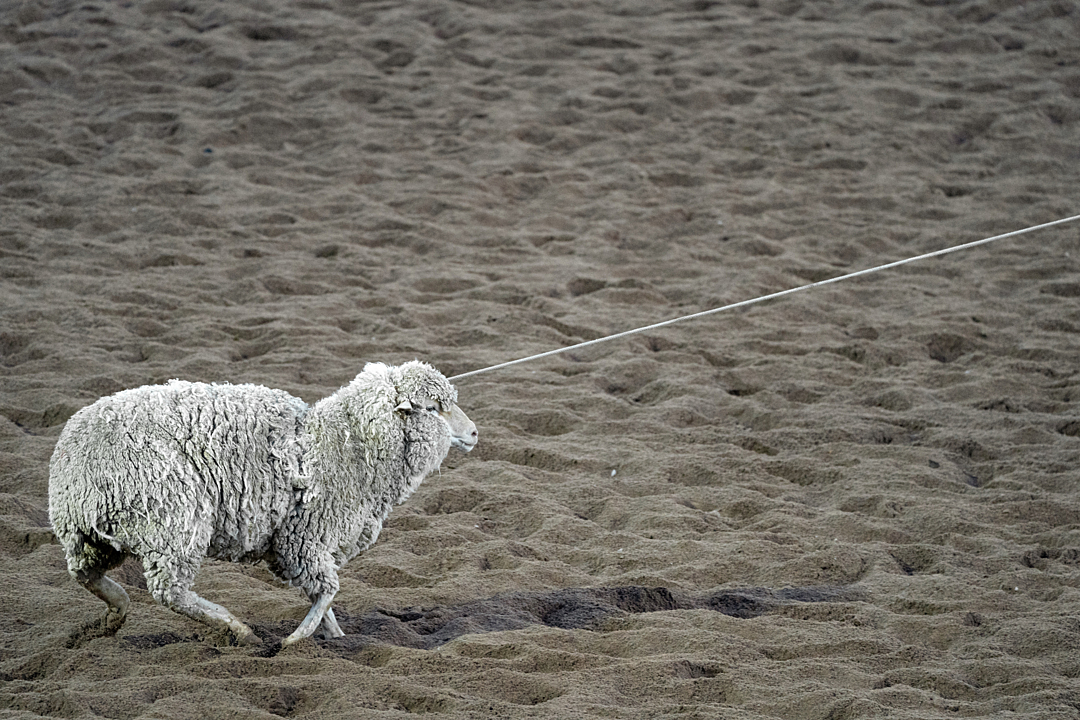
Many local rodeos include a children’s event called “mutton busting,” in which children aged four to six are placed atop sheep and encouraged to hold on as the sheep, terrified, disoriented, and weighed down by a child, bolts across an arena trying to escape. The event is marketed as adorable. Animal welfare experts describe it as a troubling introduction to the normalization of animal exploitation.
Sheep are not built to carry weight on their backs. New Zealand removed the event from its rodeo program following a recommendation by the New Zealand Veterinary Association. Alameda County, California, banned mutton busting in 2019, citing animal welfare concerns. Animal Justice Canada has noted that the event may violate animal protection statutes in multiple jurisdictions because it causes distress to animals for purely entertainment purposes with no agricultural function. Meanwhile, event organizers typically do not track injuries to the children who participate, and parents are required to sign injury liability waivers before their children can ride.
The Cruelty is Closer than You Think
Two rodeos are happening this month, just minutes from Animal Place’s sanctuary in Grass Valley. On the same roads we drive, in communities where our supporters live and work.
Penn Valley Rodeo (~10 minutes from Animal Place) and Gold Country Pro Rodeo, Auburn (~30 minutes from Animal Place). Both events feature bull riding, bronc riding, calf roping, and steer wrestling, the very events at the center of documented animal welfare concerns. The animals experiencing fear and pain in these arenas are the same species as the cows, pigs, and horses we care for every day at our sanctuary.
Proximity matters. These are our neighbors hosting these events, our communities filling those bleachers.
What You Can Do
The rodeo industry relies on ticket sales and community goodwill. Both can be withheld.
- Don’t attend. Your ticket money directly funds these events and signals community approval.
- Write to sponsors. Corporate sponsors are highly sensitive to public pressure; a polite, factual letter can shift decisions.
- Contact local representatives. Ask your county supervisors to review whether rodeo equipment like flank straps and electric prods should be regulated or banned (Alameda County, CA, set a strong precedent in 2019).
- Share this article and educate your community. Most rodeo-goers are compassionate people who just haven’t been given the full picture.
- Support Animal Place. Our sanctuary and advocacy work depend on people like you.
Come See Who These Animals Really Are
The animals at our sanctuary, cows, pigs, goats, chickens, and sheep, are the same species who endure rodeo arenas every weekend. When you meet them here, their personalities, their curiosity, their fear, and their trust, they become impossible to ignore.
We invite you to visit, volunteer, and join us in building a world where animals are treated with the respect they deserve.
Images courtesy of We Animals Media

