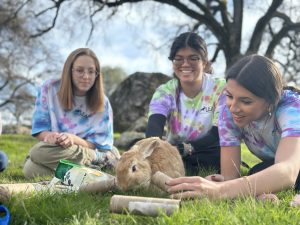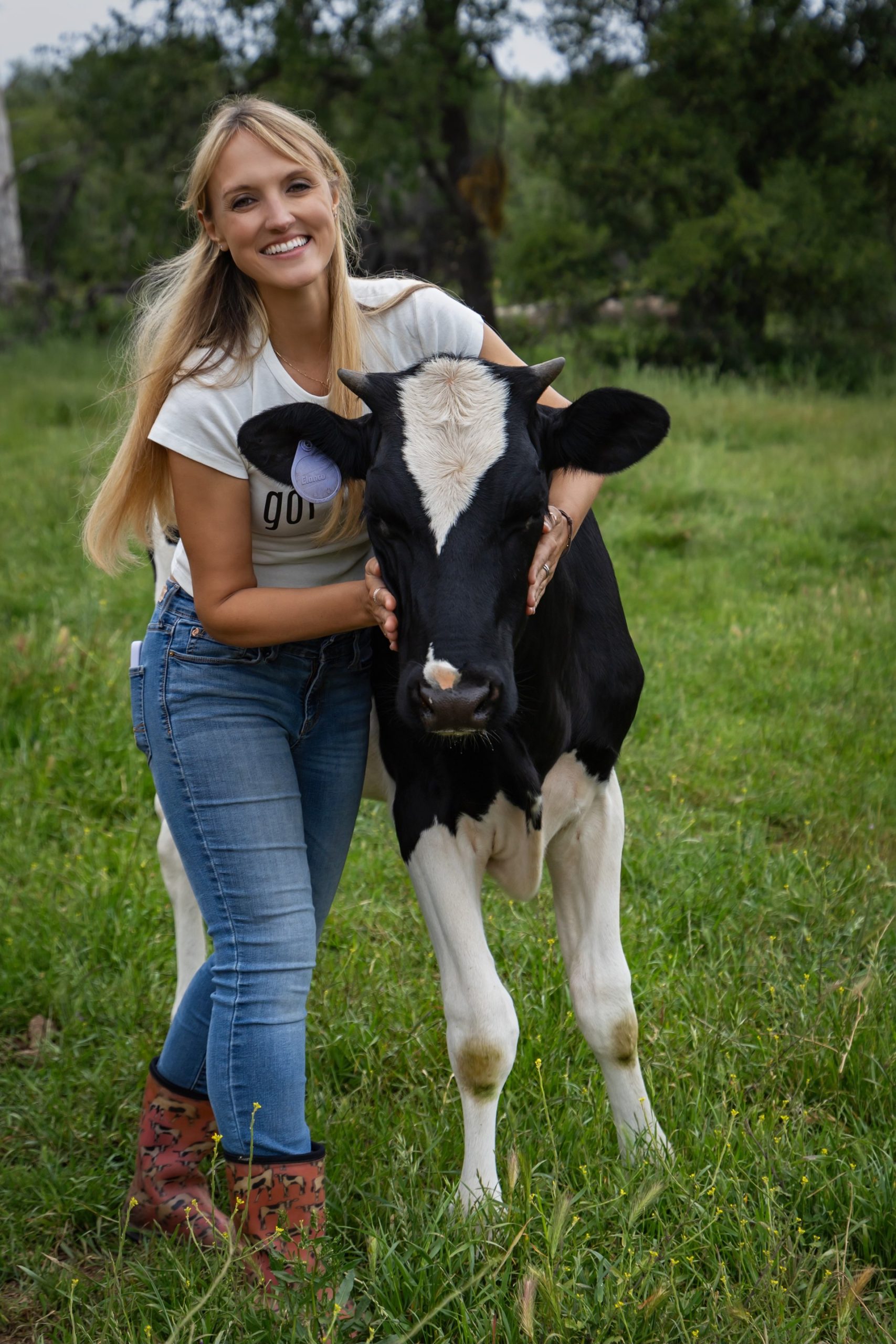
This year, Animal Place is proud to be working with LEAP (Leaders for Ethics, Animals and The Planet) to host our first-ever middle-school summer camp at the end of July. We recently sat down with Danielle Hanosh, co-founder and executive director of LEAP, to learn more about their important programs and initiatives.
What is LEAP?
Danielle: The LEAP initiative was designed to foster the development of young leaders in critical areas of social and environmental change with a specific focus on: anti-speciesism, climate solutions, plant-based lifestyles, wildlife and habitat conservation, and human and animal rights. By providing a structured, hands-on learning experience at sanctuaries and in classrooms, along with leadership development and community involvement, LEAP aims to achieve its ultimate goal: to develop thoughtful, altruistic, well-rounded, involved citizens who will become leaders for animals in both principle and practice, thereby making a significant positive impact on the world.
LEAP works with vetted groups such as farmed animal sanctuaries and after-school centers, providing them with the curricula, lesson plans, and resources needed to empower the next group of compassionate leaders.
How many sanctuaries are currently partnered with LEAP?
Danielle: There are currently over 30 approved sanctuaries that have been vetted to run the LEAP program, but they don’t necessarily all run at the same time. Some sanctuaries choose to run the nine-month school-year program for high school students, while others choose to run our LEAP Kids program for younger children. We also have one sanctuary teacher who teaches over 90 students at a local after-school center and several others who run LEAP summer camps.
Does LEAP have other partnerships?
Danielle: We feel that collaboration is exceptionally important, so we work with many sanctuaries across the US and Canada. Additionally, we have multiple collaborative relationships with organizations and companies that want to support our mission, including Beyond Meat, Animalearn, The SOSA, Peta2, and PAWS, just to name a few.
What would you say have been the biggest hurdles in scaling the LEAP program?
Danielle: The biggest hurdle in scaling LEAP has been finding ways to engage students who don’t live near one of our vetted sanctuaries. We have remedied that this year with our LEAP Club model and classroom wildlife program, but of course, we still believe that being hands-on and building relationships with individual animals is a critical piece of the program. As such, we encourage as many sanctuaries as possible to go through our vetting process and truly prioritize humane education by allocating staff time and resources to building long-term relationships with student leaders.
If a student wants to join LEAP but doesn’t have the program in their area, what can they do?
Danielle: If a student wants to join but doesn’t have the program in their area, the best thing they could do is to start a LEAP Club on their campus. LEAP Clubs meet during lunch or after school and are completely student-led. Students can create their own service project or use one of our project outlines to organize an initiative that benefits animals and the planet at the same time. If future funding allows, we also plan to give out small project materials grants to exemplary clubs to help fund service projects such as on-campus oat milk ice cream samples, beach cleanups, plant-based food drives, and all kinds of other student-led service projects.
If a sanctuary wants to partner with LEAP, where can they start?
Danielle: If a sanctuary wants to partner with LEAP, they should start on our website by reading the program requirements. If they feel that they meet our sanctuary guidelines, align with our ethics, and are willing to commit their time and energy to making the program truly exceptional for students, we ask that they begin gathering their resources and fill out an application. Once they have completed all of the requirements, including CPR training, background checks, signing the sanctuary agreement, etc., we interview them and do a site visit if it is a new location.
Where do you see LEAP going in the future?
Danielle: For the future, we are working on making our LEAP curriculum even more accessible to students by expanding our LEAP Club program to offer even more service project opportunities, eventually our wildlife education program to all grade levels at schools in the US and Canada, and continuing to work closely with Youth Advisory Council (YAC) students to mentor them and support their high impact service projects, making a positive difference for animals and people all over the world.
What is “Take a Hike,” and how is it connected to LEAP? Will it be ongoing?
Danielle: Check out the new “Take a Hike” video here!
What is the Summer Vet Camp? How can students join?
Danielle: The summer Veterinary Camp is not through LEAP, but a separate program run through Blackberry Creek Farm Animal Sanctuary in Colfax, California. The weeklong day camp covers topics such as basic anatomy, common veterinary procedures, college and career preparation, and mental health challenges and ethics in the veterinary medicine field. Practicing veterinarians and animal-care professionals lead hands-on demonstrations and workshops on:
- Wellness exams for both small and large animals
- Vaccinations and blood draws
- Avian anatomy and exams
- Equine hoof and foot care
- Spay and neuter surgeries
- Emergency preparedness (pet CPR and wilderness pet first aid)
- and more!
Our first weeklong summer camp recently ended, and it was such a success that we will definitely be replicating it annually as long as our wonderful vets are willing to donate their time to teach the next generation!
What do parents need to know before deciding if their kids should join LEAP?
Danielle: Parents should know that the LEAP program is a year-long commitment (unless students do the summer camp version) that the sanctuaries take very seriously. Students need to make it a priority, and parent transportation needs to be available so that young people can get the most out of the program and truly hone their leadership skills.
Parents should also know that students will be learning about a wide variety of issues, including sensitive topics such as animal agriculture, humane washing, the intersection of human and animal rights, and anti-speciesism, and that older students will work with challenging materials, such as undercover footage of animal abuse, when they get to some of the more complicated lessons.
In addition, they should know that their students will grow tremendously in their confidence, leadership skills, and knowledge about many real-world issues; we consistently hear parents say what a transformative positive experience LEAP has been for not only their child, but their entire family.
Are students able to get scholarships for LEAP? If so, how does that work? If not, are there grants, scholarships, etc. they can apply for after completing the LEAP program?
Danielle: Unfortunately, students do not get scholarships directly from LEAP because, being a nonprofit, we do not have the funding to provide them for as many students as are in the program. However, for students on our Youth Advisory Council, we do fund a large portion of their annual leadership retreat focused on wildlife conservation, animal advocacy, and plant-based eating, and we work hard to connect them to all students who are eligible with mentors in areas they’d like to study, including veterinary medicine, plant-based nutrition, vegan food tech, AI for animals, farm animal advocacy, sanctuary work, wildlife conservation, and environmental science. We also have a resource guide for graduating students where they can find scholarship opportunities, grants, and internship and fellowship opportunities with many of our collaborators. Additionally, if students develop relationships with their individual sanctuary leaders, they typically receive letters of recommendation, and finally, their vast number of service hours helps to make them competitive in any field they choose to go into.
What is your biggest need right now, and how can our readers help?
Danielle: Our biggest need is always funding. As a nonprofit that provides our curriculum free to all partner sanctuaries and also funds stipends for plant-based lunches for all students, a leadership retreat for our YAC students, and ongoing development of innovative programming, we need regular monthly donors to support our work.
Thank you so much, Danielle, for taking the time to talk with us about LEAP!
To learn more about LEAP and to find a sanctuary or club near you, visit www.leapforanimals.org.